
360 Rolling Car vs 180 Happy Rolling Car: Which Model Fits Your Venue?
Choosing between the 360 Rolling Car and the 180 Happy Rolling Car comes down to the audience already walking past your venue, not to which ride is more exciting. This guide compares the two models on rotation, rider experience, seating, venue fit and daily revenue, helping venue owners, distributors and investors match the machine to the floor they actually operate.
- 1. The Real Difference: Rotation Range and Control
- 360 Rolling Car: Full Rotation Under Rider Control
- 180 Happy Rolling Car: A 180-Degree Swing
- 2. Rider Experience and Who Each One Attracts
- 3. Seating and Throughput
- 4. Venue Fit
- 5. Revenue Model
- 6. Operational Considerations
- Power and Charging
- Supervision
- Maintenance
- 7. Decision Framework
- 8. Can You Run Both Models?
- Conclusion
Most operators comparing these two models are not asking which ride is better. They are asking which one earns more in the space they already have. The 360 Rolling Car and the 180 Happy Rolling Car share a concept, not a business case.
1. The Real Difference: Rotation Range and Control
360 Rolling Car: Full Rotation Under Rider Control
The 360 completes a full 360-degree rotation. Riders steer with a patented joystick instead of a fixed cycle, so the sequence is set by the person inside the car. The rider inverts at the top, which is what makes passers-by stop and watch.
Published specs: L 175 × W 140 × H 140 cm, 150 kg single rider and 200 kg dual-rider version, 2 m/s maximum, 12 hours per charge with 3–4 hours charging, IP54 indoor and outdoor, age 6+ with supervision.
180 Happy Rolling Car: A 180-Degree Swing
The 180 swings through 180 degrees without inverting. Motion is smoother, the arc is easier to read from outside, and it feels less intimidating to first-time riders and young children. It is a two-seater, so a parent and child ride together.
2. Rider Experience and Who Each One Attracts
- 360 Rolling Car: teens and adults, thrill-seekers, groups who came to be scared. It is the unit that gets filmed.
- 180 Happy Rolling Car: families with children, mixed-age groups, first-timers. Riders come back with a sibling.
The 360 sells courage; the 180 sells time together. That shapes ticket design more than the machine does.
3. Seating and Throughput
Both carry two people, differently. The 360 comes as a single-rider unit at 150 kg and a dual-rider unit at 200 kg; both seats sit inside the ring and both riders invert together. The 180 is a two-seater by design, with a wider body and side-by-side seating.
The practical difference is loading time. A 360 needs a harness check before every rotation, and the check runs longer with a rider who has never inverted. A 180 loads faster because the motion needs less explanation.
4. Venue Fit
The 360 occupies 1.4 m × 1.75 m, small for a full-inversion ride, and its IP54 rating lets it run indoors or outdoors: mall concourses, FEC floors and plazas where floor space is the constraint. Allow a clear safety radius around the rotating frame, not just the footprint.
The 180 carries a wider body for its side-by-side seats. It suits FECs, mall family zones, theme park family areas and resorts, and sits comfortably beside kiddie rides.
Location decides the revenue ceiling more than the equipment does — see best locations for a 360 Rolling Car business.
5. Revenue Model
They reach similar daily revenue through different transactions. Illustrative figures only:
- 360 Rolling Car: 3perride×40rides=120 per unit per day
- 180 Happy Rolling Car: 4percar,tworiders×30car−loads=120 per unit per day
The 360 earns per person, rewarding single-ride pricing and the "one more go" repeat. The 180 earns per group, rewarding family packages, sibling discounts and bundled tickets.
If your venue sells to families, the 180 usually converts better even at a lower per-ride price. If it sells to teens and young adults, the 360 carries the higher ceiling. For daily takings see how much one unit can earn per day; for recovery see how long the payback period usually is.
Confirm pricing, lead time and freight before modelling ROI.
6. Operational Considerations
Power and Charging
The 360 publishes 12 hours of continuous operation and a 3–4 hour charge. Plan charging around closing time and keep a written rotation if you run several units. Confirm 180 charging specs against the model quoted.
Supervision
Both need a trained operator at the control point. The 360's emergency stop, automatic speed control and harness only work when someone watches the harness. The 180 needs two harness checks per cycle.
Maintenance
Daily: frame and fasteners, harness and seats, lights and sound. Weekly: battery contacts, joints, rim and tyre wear. Keep a log per unit — buyers and inspectors both ask for it. Marwey supplies a maintenance guide with each unit.
7. Decision Framework
Weighing another category instead? The same criteria apply in 360 Rolling Car vs Go Kart business.
8. Can You Run Both Models?
Yes, and for many FECs it is the better answer. The 360 anchors the thrill end and pulls traffic; the 180 serves the family group that arrives with it. Two units of different character raise dwell time more than two identical ones.
Check total power capacity, floor loading and the combined safety radius first.
Conclusion
The 360 and the 180 do not compete for the same slot. One sells a solo thrill, the other a shared ride. Match the model to the audience already walking past your venue, then confirm footprint, capacity and lead time for the exact model.
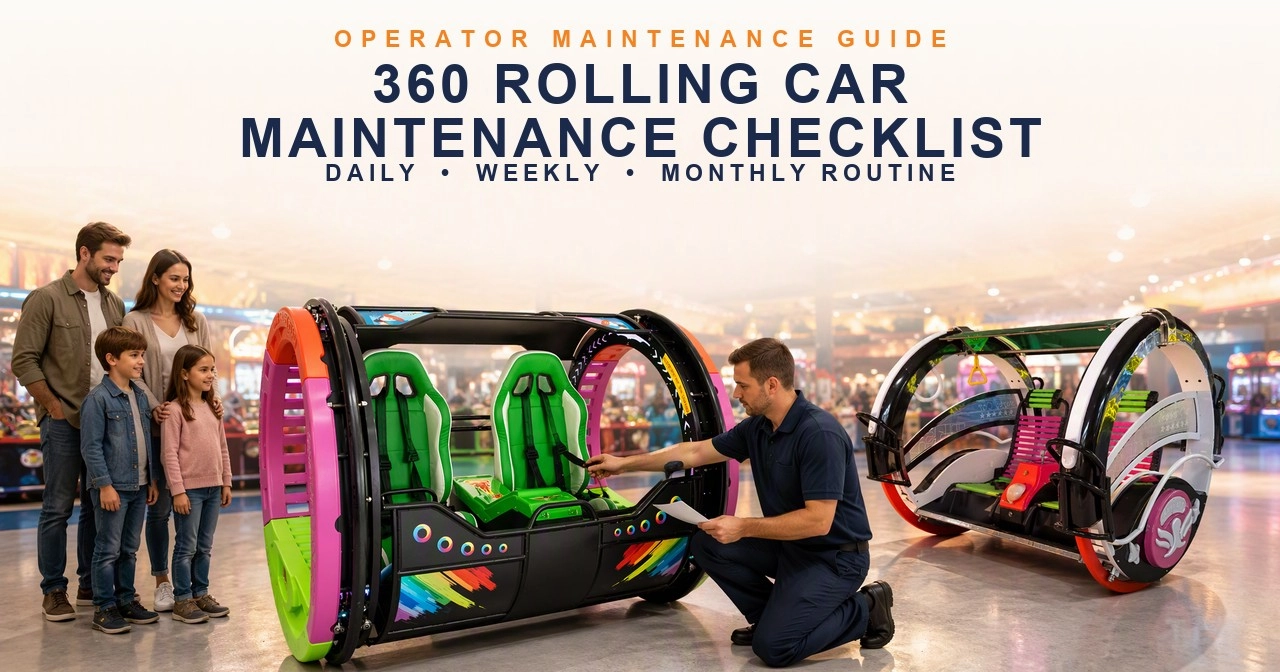
360 Rolling Car Maintenance Guide: Daily, Weekly and Monthly Operator Checklist
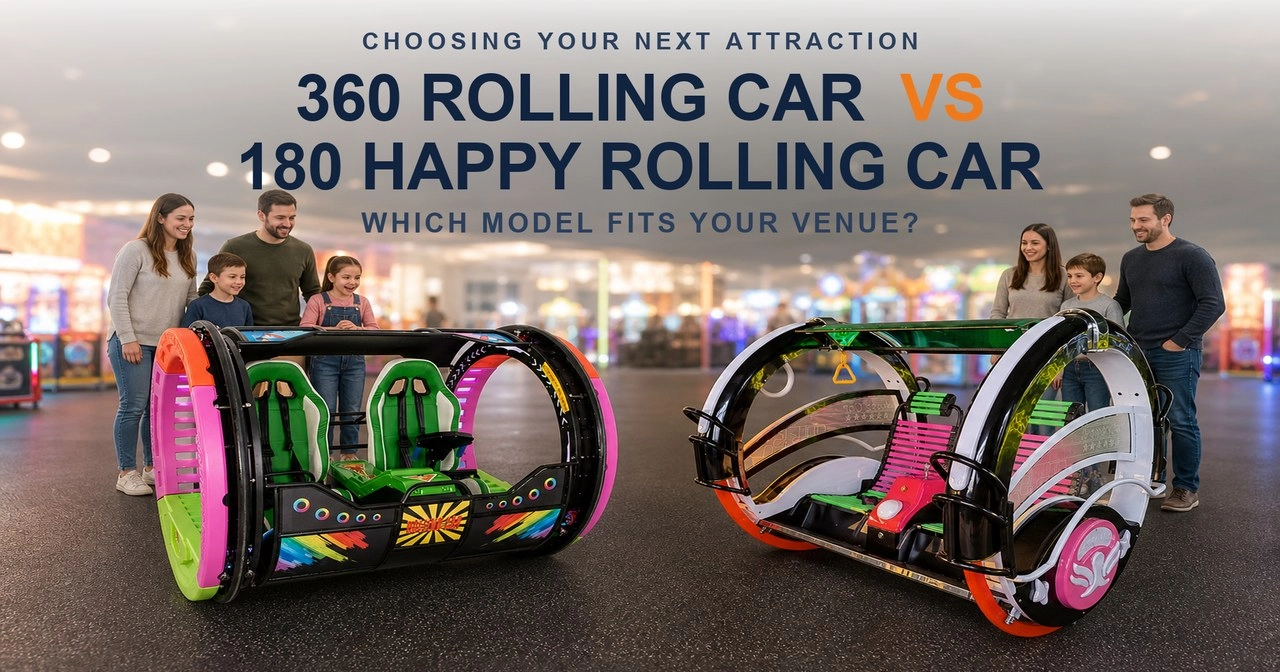
360 Rolling Car vs 180 Happy Rolling Car: Which Model Fits Your Venue?
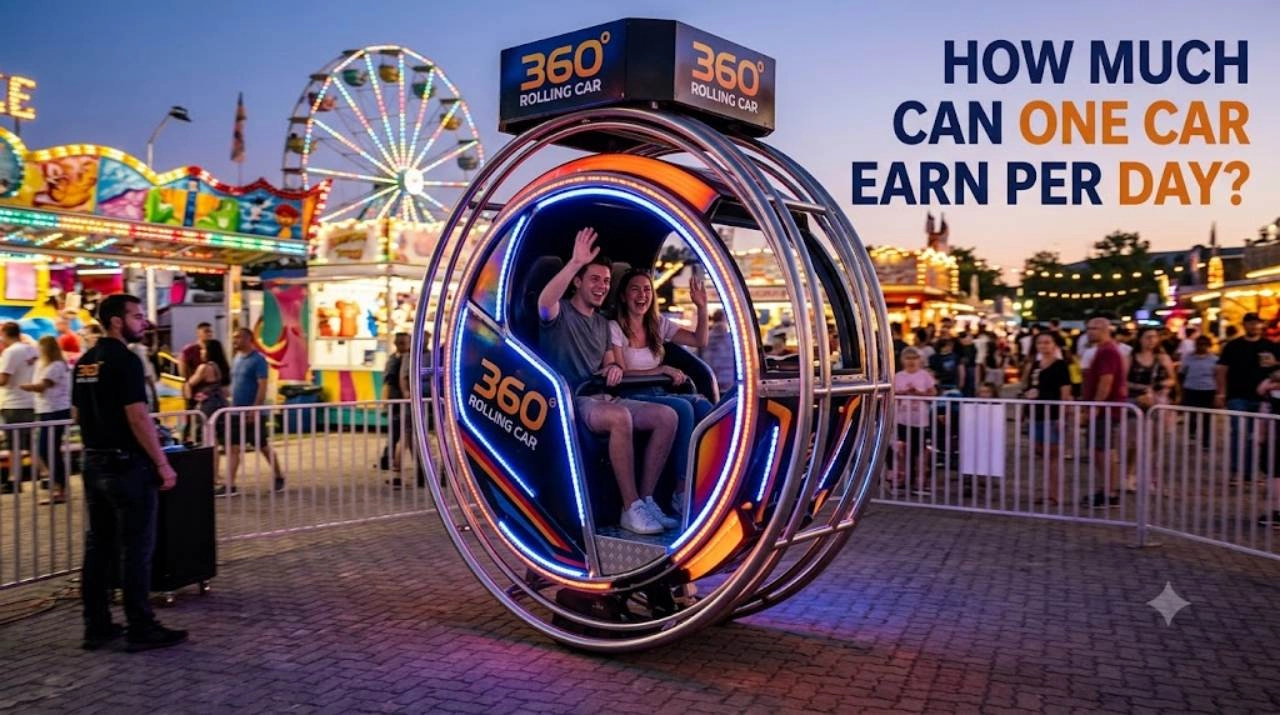
How Much Can One 360 Rolling Car Earn Per Day? A Business Revenue Guide
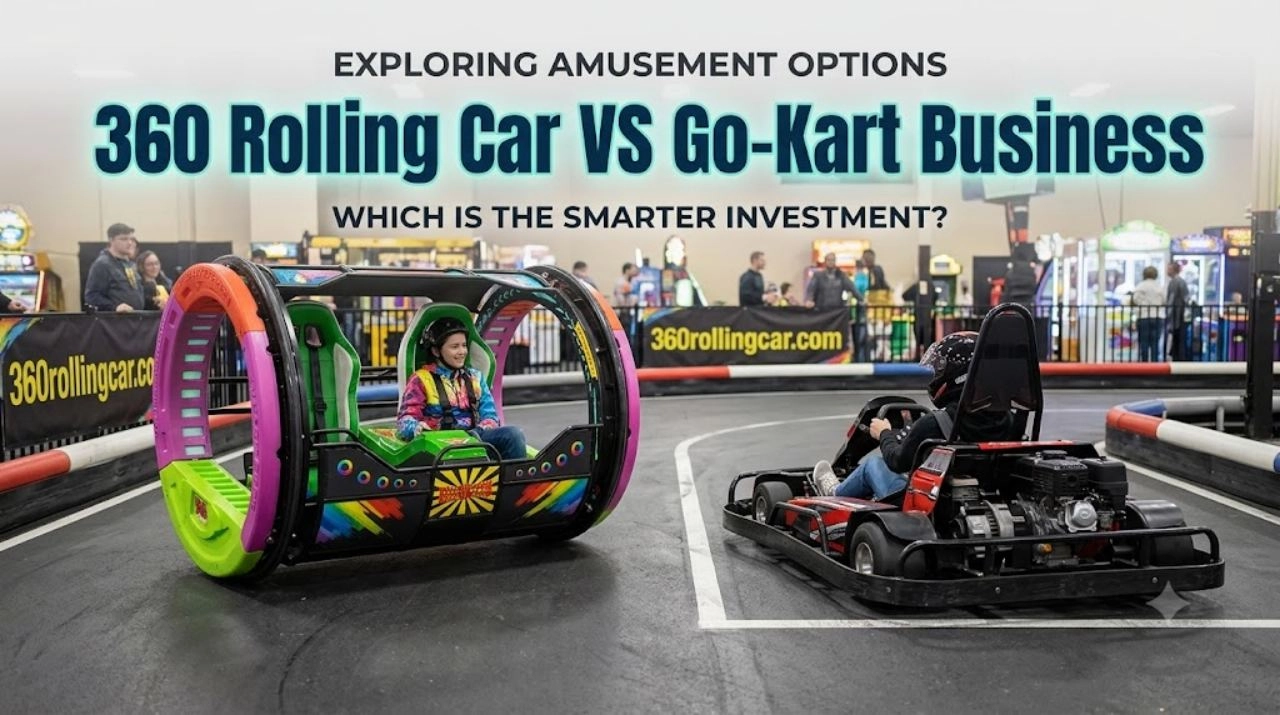
360 Rolling Car vs Go Kart Business: Which Entertainment Business Is More Profitable?
360 Rolling Car
What age group is the 360 Rolling Car suitable for?
The 360 Rolling Car is typically suitable for riders aged 6 years and above. Younger riders may participate when accompanied by an adult, depending on local safety regulations and park policies.
Does Marwey provide after-sales support?
Yes. Marwey provides comprehensive after-sales service, including technical support, spare parts supply, and maintenance guidance. Our team assists operators throughout the entire lifecycle of the equipment.
Can the 360 Rolling Car be customized?
Yes. Marwey offers customization options including colors, branding, lighting effects, and thematic designs. This allows operators to match the ride with the theme of their park, arcade, or entertainment center.
What space is required to install a 360 Rolling Car?
Installation requirements vary by project size and layout. In general, the ride requires a dedicated area with sufficient clearance for rotation and movement, along with stable ground. Our team provides site planning and layout design to ensure efficient use of your space.
How can I start a project with Marwey?
Simply contact our team through the website or request a quote. Our specialists will help you with project planning, equipment selection, layout design, and turnkey solutions tailored to your entertainment venue.

Marwey 360 Degree Remote Control Rolling Car Ride Wholesale Swinging Hamster Ball Manufacturer
Add excitement to your venue with the 360 Rolling Car Swinging Hamster Ball. A thrilling attraction for amusement parks and family entertainment centers.

Marwey 180 Degree Rolling Car for Sale 2 Seater Happy Roller Car Supplier
Discover the 180 Happy Rolling Car, an exciting spinning amusement ride for theme parks and family entertainment centers. Safe, durable, and customizable by Marwey.

360 Degree Rolling Car for Adults Space Walker 360 Rolling Car Ride for Sale Marwey Amusement Equipment
Explore Marwey’s 360 Rolling Car ride, a thrilling amusement attraction for theme parks and FECs. Durable design, smooth rotation, and customizable solutions.
 Scan QR Code