
Off-Season Storage and Restart Checks for Rolling Car Rides
How to put a rolling car into seasonal storage without damaging it, the monthly checks that matter, and an eight-step restart sequence that catches faults before the first paid session.
- Off-Season Storage and Restart Checks for Rolling Car Rides
- Before storage: the shutdown checklist
- Where and how to store
- Monthly checks during storage
- The restart sequence
- Common restart faults and what they mean
- Relocating a ride between venues
- Frequently asked questions
- How should I store the battery during the off-season?
- Can I leave the ride outdoors under a cover?
- How long can a rolling car sit unused?
- What should I check first when bringing the ride back into service?
- Do I need to re-certify the ride after storage?
- Treat the closed season as part of the lifecycle
Off-Season Storage and Restart Checks for Rolling Car Rides
A rolling car that sits unused for two months is not resting — it is deteriorating on its own schedule. Batteries self-discharge, seals dry, dust settles into control enclosures, and the first session of the new season becomes a diagnostic exercise instead of a revenue day.
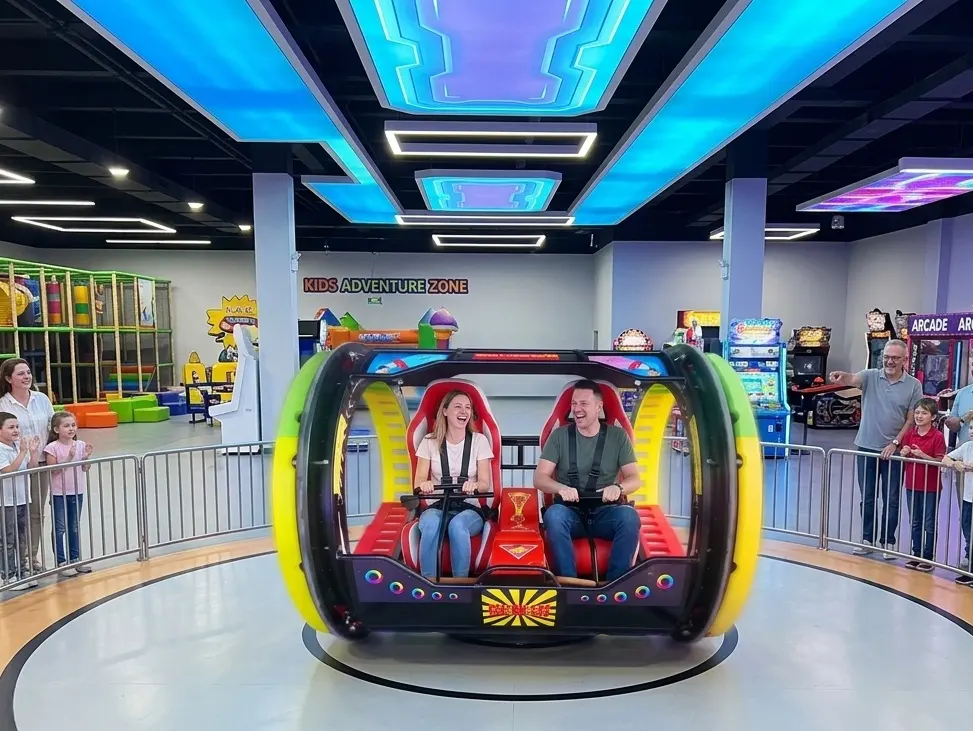
This guide covers how to put a 360 Rolling Car, 180 Happy Rolling Car or 360 Rolling Hamster Ball into storage properly, and the restart sequence that catches problems before riders do. It applies to seasonal shutdowns, long quiet periods, and rides being relocated between venues.
Before storage: the shutdown checklist
Storage preparation is done over a day, not an hour. Work through it in this order:
- Clean the ride thoroughly. Dirt holds moisture, and moisture is what corrodes terminals and control boards. Clean the body, seat, controls, and the underside of the chassis where grit accumulates.
- Dry it completely. Moisture trapped under a cover is worse than no cover. Allow a full day of air drying in a ventilated space.
- Service the battery. Charge fully, then discharge to roughly half charge for storage. Do not store flat and do not store full. Disconnect the pack from the ride if the model allows it without disturbing the control configuration — this stops parasitic drain.
- Lubricate the specified points. A light application at the points in your manual protects against corrosion during inactivity. Do not over-apply; excess grease collects dust.
- Release tension where it matters. Restraint springs and belts stored under tension lose resilience. Where the manual permits, store restraints in their relaxed position.
- Protect the control enclosure. Check door seals and cable glands. A desiccant pack inside the enclosure is cheap insurance in humid climates.
- Cover the ride properly. A breathable cover, tied down, that does not trap condensation against the body. Plastic sheeting wrapped tight is the classic mistake.
- Document the state. Record the battery voltage at storage, the hours run before shutdown, and any fault you deferred. That record is what makes the restart predictable.
Where and how to store
Storage conditions decide whether the restart takes a day or a fortnight. The priorities, in order:
- Dry. Humidity is the primary enemy of electronics and terminals. A damp shed is worse than a cold dry one.
- Ventilated. Air movement prevents condensation forming on cold metal overnight.
- Out of direct sun. UV degrades plastics, seat material and cable insulation.
- Above the floor. Put the ride on pallets or blocks. Ground moisture wicks into chassis and tyres, and a floor that floods once will find you.
- Protected from pests. Rodents chew wiring and nest in enclosures. Check monthly, and avoid storing near stored feed or waste.
If the ride stays in an unheated space through a cold season, expect the battery to lose charge faster and check it monthly rather than once.
Monthly checks during storage
Storage is not a set-and-forget period. Once a month, spend twenty minutes:
- Measure battery voltage and top up toward half charge if it has dropped
- Look for moisture inside the control enclosure and under the cover
- Check for pest activity — droppings, chewed insulation, nests
- Turn the wheels or rollers slightly so contact surfaces do not flat-spot
- Confirm the cover is intact and the ride is still level and dry
Log each check. A storage period with four logged checks and one with none are very different risks, and the difference only shows up at restart.
The restart sequence
Do this before the first paid session, on a day when you have time to fix what you find.
| Step | Check | Why it matters after storage |
|---|---|---|
| 1 | Remove cover, inspect for moisture, pests and physical damage | Catches the damage that happened while nobody was looking |
| 2 | Inspect wiring and connectors for corrosion or chew damage | The most common storage fault is a chewed or corroded harness |
| 3 | Charge the battery fully with the specified charger | A pack stored at half charge needs a full cycle before load testing |
| 4 | Check tyre and roller condition, including flat spots | Months of static load deform contact surfaces |
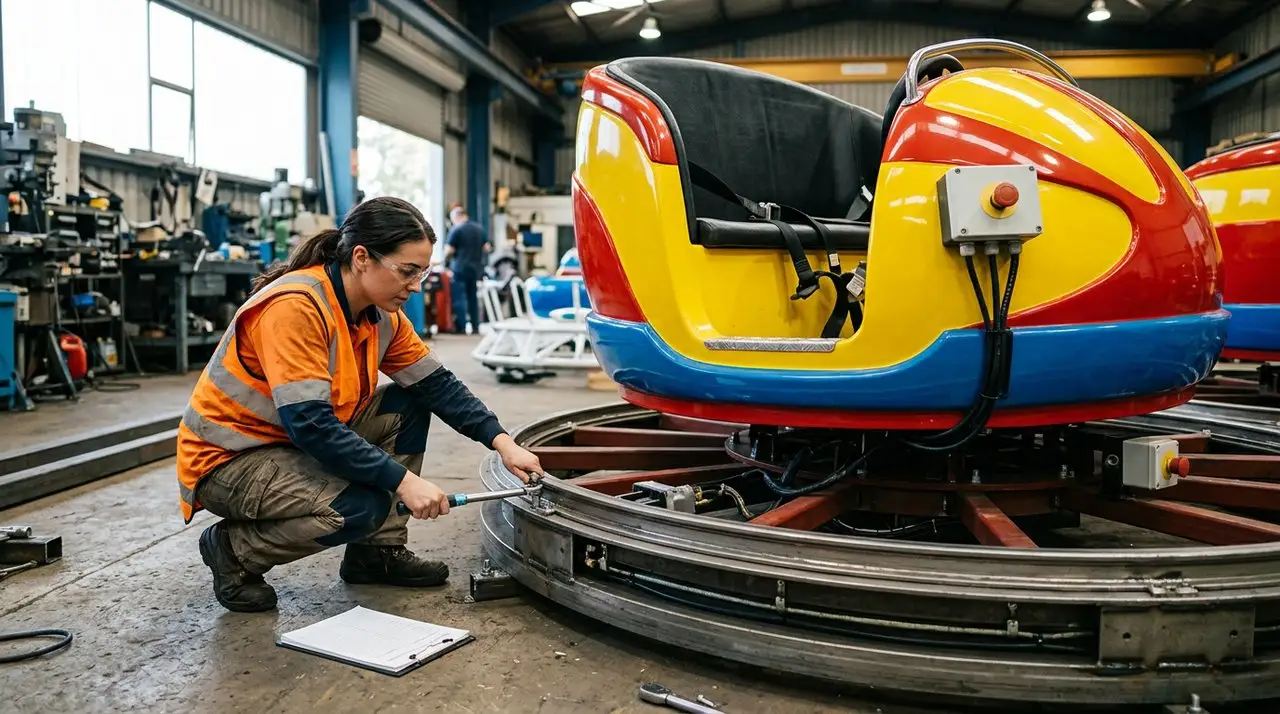
| 5 | Torque-check fasteners on seat, panels and axles | Thermal cycling loosens what vibration did not |
| 6 | Test emergency stop and restraint operation | Safety functions must be proven, not assumed |
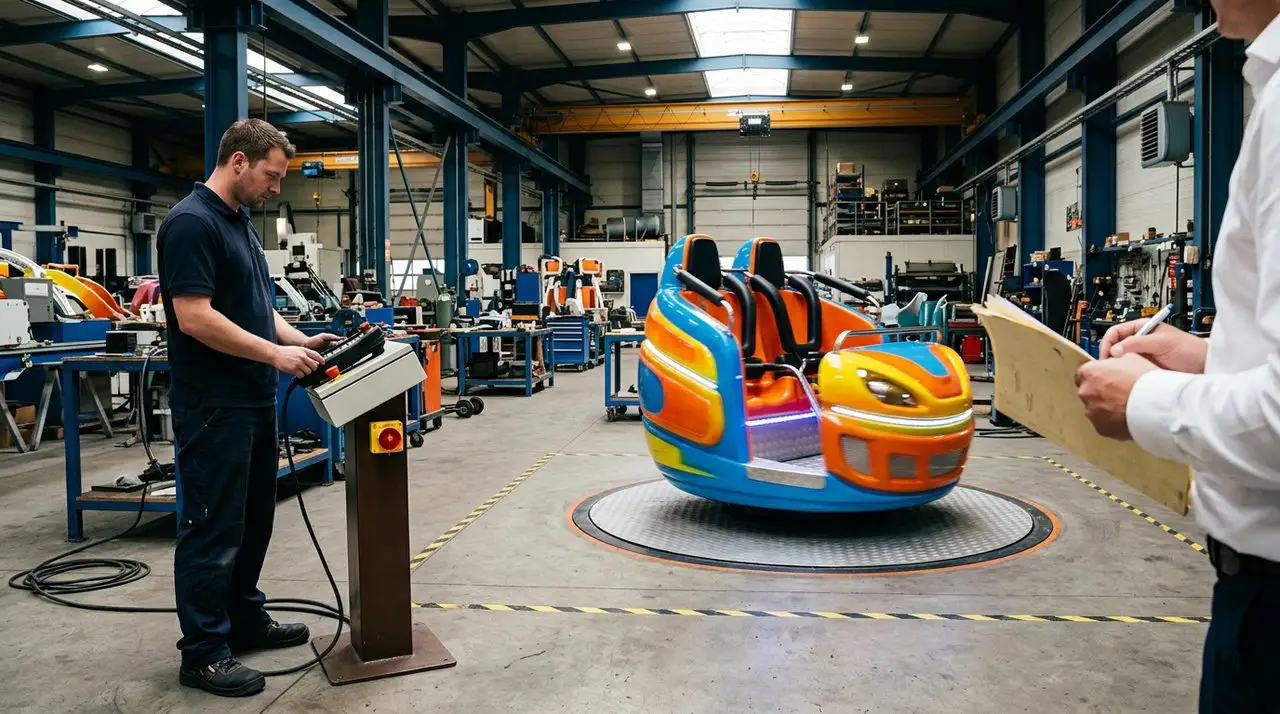
| 7 | Run the ride unloaded through full motion in every direction | Reveals joystick drift and control faults with nobody aboard |
| 8 | Run a loaded session and record working hours | Gives you the season's first battery baseline to compare against |
Do not skip step 7 to save ten minutes. An unloaded motion test is the cheapest way to discover that a joystick has drifted over the closed season, and the only alternative is discovering it with a rider aboard.
Common restart faults and what they mean
- Ride will not power on. Almost always the battery: deeply discharged, or a terminal corroded over the break. Charge and clean before assuming a controller fault.
- Powers on, no motion. Check the emergency stop circuit first, then the joystick. Both are common after a long idle, and both are quick to test.
- Runs a short session. The pack lost capacity during storage, usually from being stored flat. Measure hours run and compare against the rated 5–8 hours for the 360 Rolling Car and 180 Happy Rolling Car.
- Grinding or clicking on rotation. Bearing or debris. Inspect before operating further.
- Control board faults after damp storage. Moisture in the enclosure. Dry thoroughly, inspect for corrosion, and escalate if the fault persists — this is not a fault to keep resetting.
Relocating a ride between venues
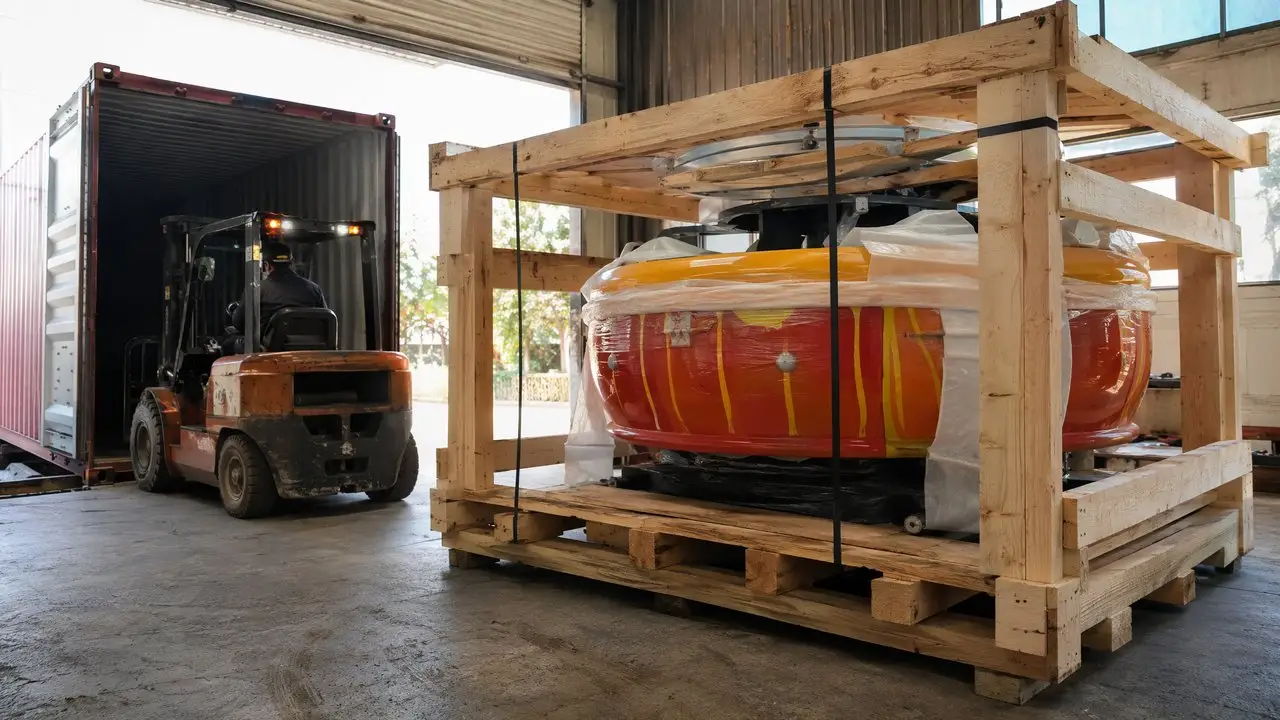
The same shutdown and restart logic applies, with two additions. First, transport with the battery removed or isolated where the model allows, and secure the ride against movement in transit. Second, re-verify the ride against the requirements of the new venue or country at restart — a ride that was compliant where it was built may need documentation updates before it operates somewhere else. The relevant frameworks are the ASTM F24 committee standards in the United States, EN 13814 in Europe, and the equivalent national rules elsewhere; your venue's insurer will usually tell you which applies.
Frequently asked questions
How should I store the battery during the off-season?
Fully charge it, then bring it to roughly half charge, disconnect it from the ride where possible, and store it dry and cool. Check the voltage monthly and top up if it drops.
Can I leave the ride outdoors under a cover?
Only with a breathable cover and the ride raised off the ground. Tight plastic sheeting traps condensation and does more damage than leaving the ride uncovered in a ventilated shelter.
How long can a rolling car sit unused?
The ride tolerates months of storage well if it is prepared and checked monthly. The battery is the limiting component, and it degrades fastest when stored flat.
What should I check first when bringing the ride back into service?
Wiring and connectors, then the battery, then the emergency stop and restraint, then an unloaded motion test. That order catches the most common storage faults before they reach a rider.
Do I need to re-certify the ride after storage?
Storage itself does not normally require re-certification, but relocation to a new venue or jurisdiction often does. Check with the venue and your insurer before the first operating day.
Treat the closed season as part of the lifecycle
The operators who open a new season smoothly are the ones who closed the last one properly: cleaned, dried, documented, and checked monthly. If you only do three things, do these — store the battery at half charge, keep the ride dry and off the floor, and run an unloaded motion test before the first paid session.
For the routines that run alongside this, see our maintenance schedule and the operations guides. Storing or relocating a specific model? Ask our team for the storage guidance for your exact configuration.
Off-Season Storage and Restart Checks for Rolling Car Rides
360 Rolling Car Maintenance Schedule: Daily to Yearly Checklist
Troubleshooting a 360 Rolling Car: Joystick, Motion and Power Faults
Spare Parts and Replacement Cycles for 360 Rolling Car Rides
360 Rolling Car
What is a 360 Rolling Car?
A 360 Rolling Car is an interactive amusement ride designed to deliver a thrilling spinning experience. Riders sit inside a specially engineered vehicle that can rotate 360 degrees while moving along a track or within a designated area. It is commonly installed in amusement parks, family entertainment centers (FECs), theme parks, and tourist attractions.
Does Marwey provide after-sales support?
Yes. Marwey provides comprehensive after-sales service, including technical support, spare parts supply, and maintenance guidance. Our team assists operators throughout the entire lifecycle of the equipment.
What space is required to install a 360 Rolling Car?
Installation requirements vary by project size and layout. In general, the ride requires a dedicated area with sufficient clearance for rotation and movement, along with stable ground. Our team provides site planning and layout design to ensure efficient use of your space.
What maintenance is required?
Routine maintenance is simple and includes regular inspections, lubrication of moving components, and safety checks. We provide a detailed maintenance guide to ensure smooth operation and long service life.
Can the 360 Rolling Car be customized?
Yes. Marwey offers customization options including colors, branding, lighting effects, and thematic designs. This allows operators to match the ride with the theme of their park, arcade, or entertainment center.
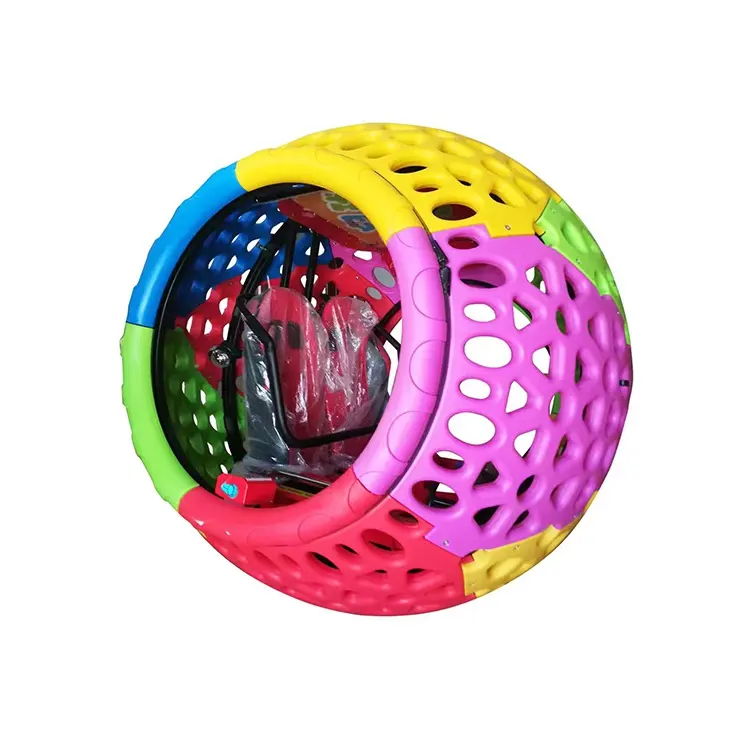
Marwey 360 Degree Remote Control Rolling Car Ride Wholesale Swinging Hamster Ball Manufacturer
Add excitement to your venue with the 360 Rolling Car Swinging Hamster Ball. A thrilling attraction for amusement parks and family entertainment centers.
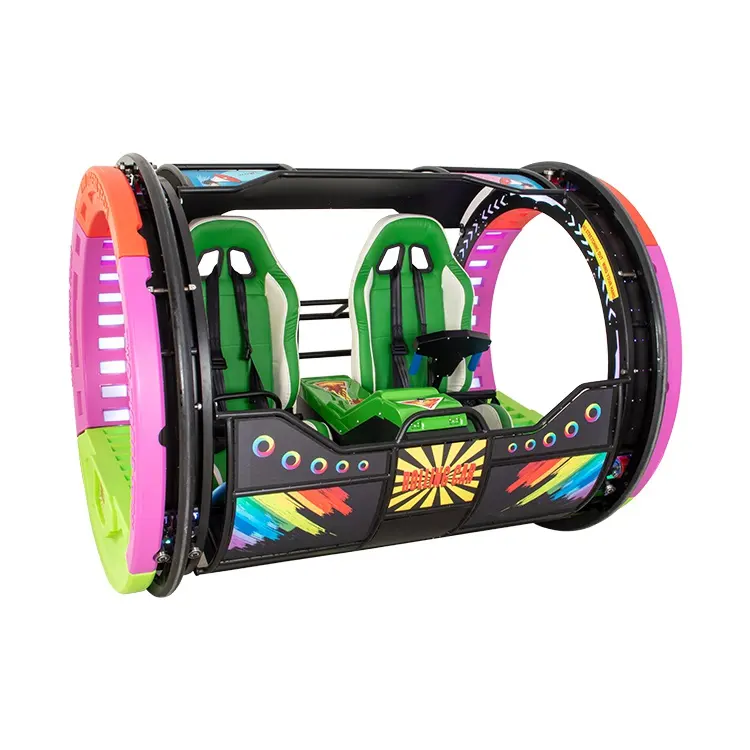
360 Degree Rolling Car for Adults Space Walker 360 Rolling Car Ride for Sale Marwey Amusement Equipment
Explore Marwey’s 360 Rolling Car ride, a thrilling amusement attraction for theme parks and FECs. Durable design, smooth rotation, and customizable solutions.
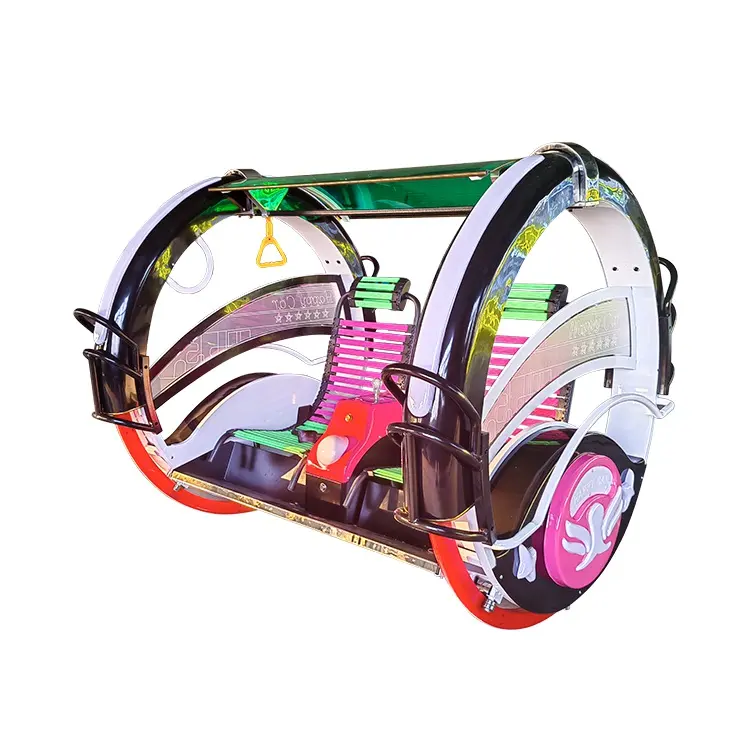
Marwey 180 Degree Rolling Car for Sale 2 Seater Happy Roller Car Supplier
Discover the 180 Happy Rolling Car, an exciting spinning amusement ride for theme parks and family entertainment centers. Safe, durable, and customizable by Marwey.
 Scan QR Code