
Troubleshooting a 360 Rolling Car: Joystick, Motion and Power Faults
A fault-finding sequence for rolling car rides, ordered so the cheapest and most common causes are eliminated first — power delivery, joystick swap test, motion faults, short sessions, and when to stop and escalate.
- Troubleshooting a 360 Rolling Car: Joystick, Motion and Power Faults
- Step 1: Establish the symptom precisely
- Step 2: Rule out power before anything else
- Step 3: Joystick and control faults
- Symptoms and likely causes
- The swap test
- Step 4: Motion faults that are not the joystick
- Step 5: Short sessions and charging faults
- Step 6: Know when to stop
- Frequently asked questions
- Why does my rolling car not move even though the lights work?
- How do I know if the joystick or the controller is faulty?
- Can a weak battery cause erratic motion?
- Is it safe to keep running a ride with a drifting joystick?
- How long does a replacement take?
- Keep a fault log, not just a parts drawer
Troubleshooting a 360 Rolling Car: Joystick, Motion and Power Faults
Most rolling car problems announce themselves as one of three symptoms: the ride will not move, it moves but not the way the joystick asks, or it stops partway through a session. Each symptom narrows the fault to a different subsystem, and knowing which one you are facing is the difference between a twenty-minute fix and a wasted afternoon swapping parts.
This guide is a fault-finding sequence for the Marwey 360 Rolling Car, 180 Happy Rolling Car and 360 Rolling Hamster Ball. Work through it in order — the steps are ordered so that the cheapest and most common causes are eliminated first.
Step 1: Establish the symptom precisely
Before touching anything, write down what the ride actually does. "It's broken" is not a symptom. These are:
- No power at all — no lights, no sound, no response
- Powers on, no motion — lights work, joystick produces nothing
- Motion in some directions only — forward works, sideways does not
- Motion drifts or lags — the ride responds late, over-travels, or will not hold a heading
- Cuts out under load — runs fine empty, stops with two adults aboard
- Runs for a short session — everything works, but the shift ends early
Write it down with the time, the rider load and the battery level at the moment it happened. That record is what turns a vague fault into a diagnosable one, and it is the first thing a technician will ask for.
Step 2: Rule out power before anything else
Roughly half of "dead ride" reports are power delivery, not control electronics. Work in this order:
- Charge state. Confirm the pack is actually charged — not that it was plugged in. A charger that stopped working overnight looks exactly like a flat battery in the morning.
- Charger function. Check the charger output and whether it cuts off correctly. On the 48V25AH pack used in the Hamster Ball, a full charge takes about 4 hours; the 48V20AH and 12V45AH packs take about 8 hours. A charger that finishes in an hour is not finishing.
- Battery terminals. Loose or corroded terminals cause voltage sag under load, which reads to the controller as a flat battery. Clean and re-tighten.
- Fuses and breakers. Replace with the specified rating only. A larger fuse does not fix a fault; it hides one.
- Emergency stop circuit. Confirm the stop is released and the circuit is intact. This is the single most common "no motion" cause after a shift change.
If the ride powers on normally and holds a charge, move to the control system.
Step 3: Joystick and control faults
Joystick faults fall into two families: mechanical (the stick does not physically return or travels unevenly) and electrical (the signal is wrong even though the stick feels fine).
Symptoms and likely causes
| Symptom | Likely cause | First action |
|---|---|---|
| Stick feels loose or will not centre | Return spring or worn gate | Replace the joystick assembly — do not attempt to re-tension it |
| Dead zone at the start of travel | Potentiometer wear or calibration drift | Recalibrate; if the dead zone returns, replace the unit |
| Motion continues after release | Signal offset or a sticking mechanism | Stop operating the ride immediately and diagnose |
| One direction unresponsive | Channel fault in the joystick or wiring | Swap the joystick with a known-good unit to isolate |
| Erratic motion, jumps | Loose connector or damaged cable | Check connector seating and cable strain at the pivot |
A ride that keeps moving after the joystick is released is not a nuisance fault. Take it out of service. The failure mode is a rider being carried into a barrier, and no amount of operator attention compensates for a control that does not return to neutral.
The swap test
If you carry one spare joystick, you can isolate most control faults in ten minutes: fit the known-good unit. If the fault disappears, the joystick was the problem. If it stays, the fault is in the harness or the controller — and you have saved yourself from ordering the wrong part.
Step 4: Motion faults that are not the joystick
When the control signal is clean but the ride still misbehaves, the fault is downstream.
- Grinding or metallic clicking while rotating. Bearing or gear wear. Stop the ride, inspect the rotating assembly, and check for debris wrapped around an axle before assuming a bearing has failed.
- Uneven speed between units. Compare against a second unit on the same charge level. A consistent difference points to a motor or controller difference, not to rider load.
- Vibration that was not there last month. Check fastener torque first, then wheel or roller condition. Vibration is usually mechanical and usually cheap to fix early.
- Ride stalls under two adults. This is a load-related symptom: check battery voltage under load, motor current draw, and whether the floor surface has changed (a new mat or a slope matters).
On a 300W drive unit, a ride that pulls two adults fine on a smooth floor but stalls on carpet is telling you about rolling resistance, not about the motor.
Step 5: Short sessions and charging faults
If the ride runs but never finishes a normal shift, the question is capacity, not control. Our 360 Rolling Car and 180 Happy Rolling Car are rated at 5–8 working hours per full charge; the Hamster Ball runs a 48V25AH pack on a shorter charge cycle. A unit that consistently lands below that band while its siblings do not has an ageing pack.
Three checks separate a tired battery from a charging problem:
- Charge it fully, then measure hours run. Repeat three days running. A downward trend across a week is capacity loss; a single bad day is usually a charger or a partial charge.
- Check the charger on a known-good pack. If the good pack also underperforms, the charger is the fault.
- Inspect terminals and cabling for heat marks. Resistance in the path costs you runtime and creates a fire risk.
Step 6: Know when to stop
Some faults should not be worked around on site. Stop and escalate to the manufacturer when:
- The ride moves without a command, or fails to stop on command
- Any welded joint or load-bearing part shows cracking
- A fault returns within a week of repair
- The controller behaves differently after a power surge or a lightning event
- You cannot reproduce the fault but it has happened twice
These are engineering questions. Marwey can supply wiring diagrams, controller configuration and replacement assemblies, and can diagnose remotely from your symptom record — start with our service contact page.
Frequently asked questions
Why does my rolling car not move even though the lights work?
Check the emergency stop circuit first, then the joystick signal, then the controller output. In practice the order of likelihood is: emergency stop engaged or circuit open, flat or sagging battery under load, joystick channel fault, controller fault.
How do I know if the joystick or the controller is faulty?
Fit a known-good joystick. If the fault clears, the joystick was at fault; if it remains, the problem is in the harness or controller. This swap test is faster and cheaper than any diagnostic tool you can buy.
Can a weak battery cause erratic motion?
Yes. Voltage sag under load can cause the controller to reduce or cut output, which the operator experiences as stuttering or a ride that stops mid-session. Measure voltage under load, not at rest.
Is it safe to keep running a ride with a drifting joystick?
No. A joystick that does not return to neutral is a control failure. Take the ride out of service and replace the unit — this is not a fault to manage with operator caution.
How long does a replacement take?
Joysticks, chargers and restraints are fast-moving parts and normally ship from stock. Motors and controllers are model-specific; check the specification on the 360 Rolling Car or 180 Happy Rolling Car page before ordering so you get the correct variant.
Keep a fault log, not just a parts drawer
The difference between an operator who troubleshoots well and one who replaces parts until the ride works is a fault log. Record the symptom, the conditions, what you changed and whether it fixed it. After three months you will know which unit is the problem child, which fault keeps returning, and which spare you should have bought two of. Pair this with a fixed maintenance routine and most faults never reach the troubleshooting stage at all.
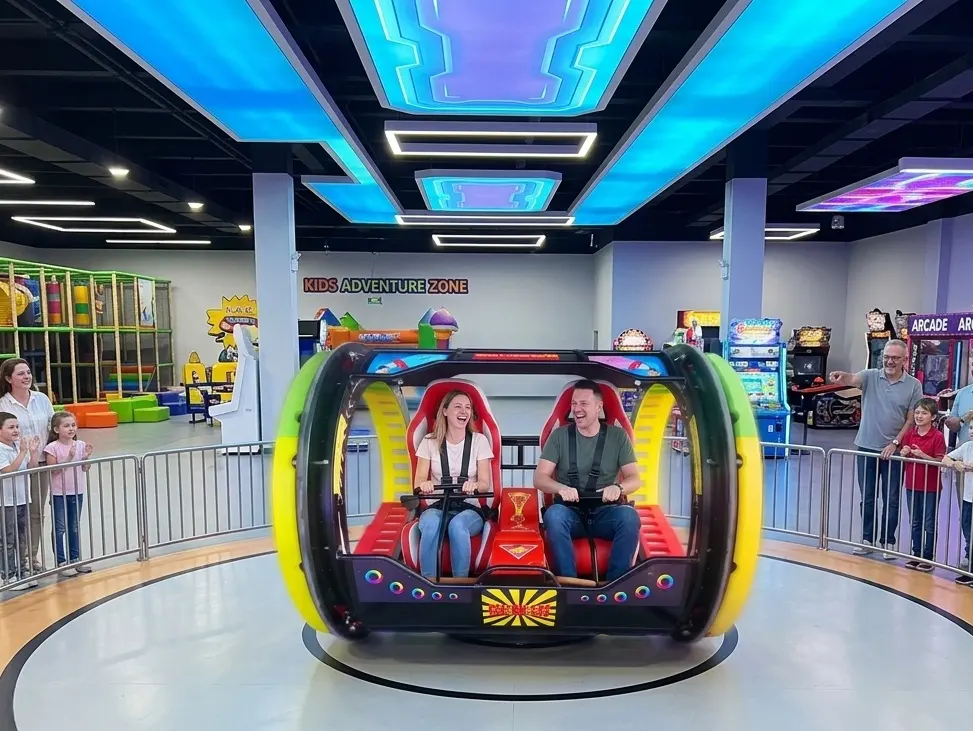
Off-Season Storage and Restart Checks for Rolling Car Rides
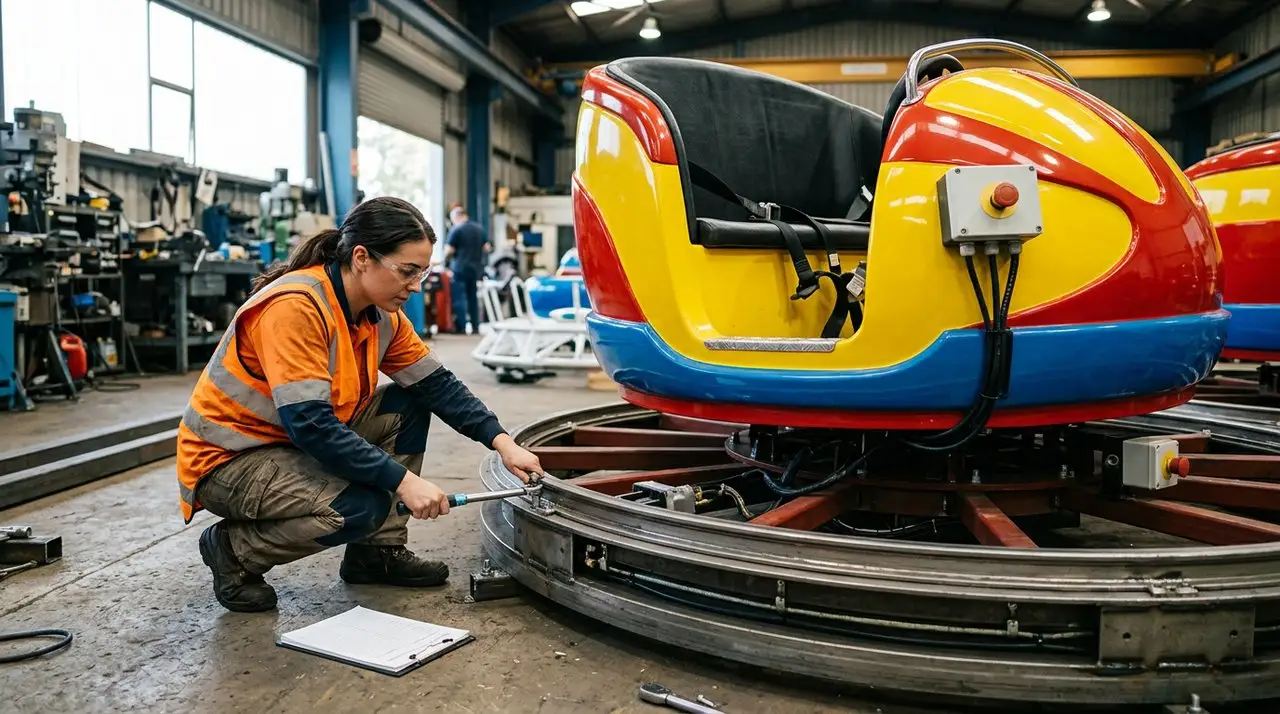
360 Rolling Car Maintenance Schedule: Daily to Yearly Checklist
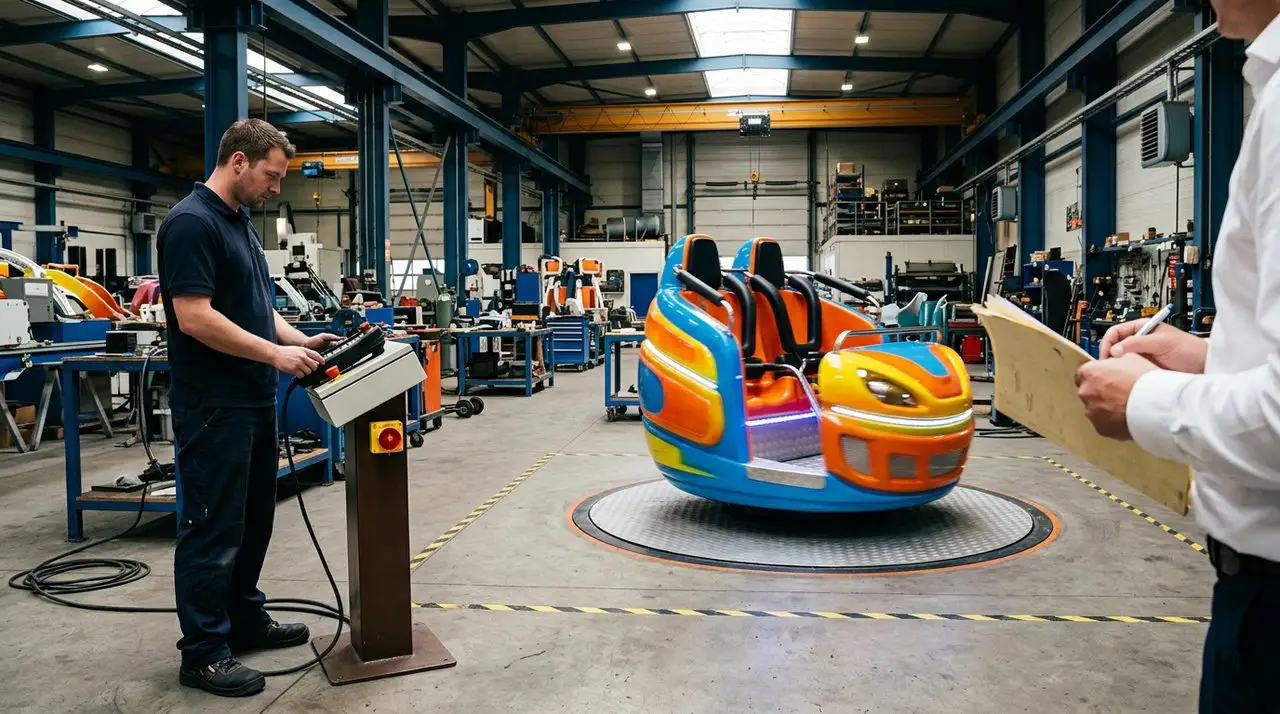
Troubleshooting a 360 Rolling Car: Joystick, Motion and Power Faults
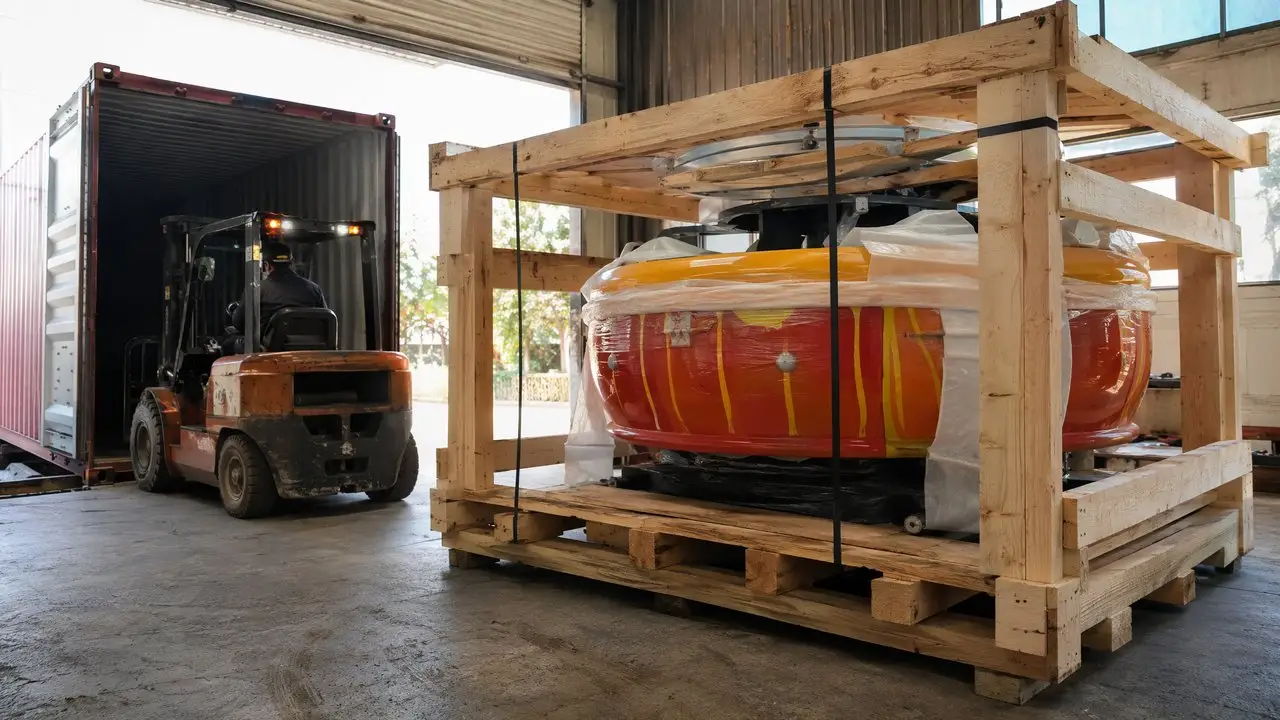
Spare Parts and Replacement Cycles for 360 Rolling Car Rides
360 Rolling Car
What age group is the 360 Rolling Car suitable for?
The 360 Rolling Car is typically suitable for riders aged 6 years and above. Younger riders may participate when accompanied by an adult, depending on local safety regulations and park policies.
What is a 360 Rolling Car?
A 360 Rolling Car is an interactive amusement ride designed to deliver a thrilling spinning experience. Riders sit inside a specially engineered vehicle that can rotate 360 degrees while moving along a track or within a designated area. It is commonly installed in amusement parks, family entertainment centers (FECs), theme parks, and tourist attractions.
Is the 360 Rolling Car safe for riders?
Yes. Safety is a top priority in the design of the 360 Rolling Car. The ride is equipped with reinforced safety harnesses, high-strength structural frames, and reliable control systems. Each unit is tested according to strict quality and safety standards to ensure stable operation and rider protection.
Does Marwey provide after-sales support?
Yes. Marwey provides comprehensive after-sales service, including technical support, spare parts supply, and maintenance guidance. Our team assists operators throughout the entire lifecycle of the equipment.
How can I start a project with Marwey?
Simply contact our team through the website or request a quote. Our specialists will help you with project planning, equipment selection, layout design, and turnkey solutions tailored to your entertainment venue.
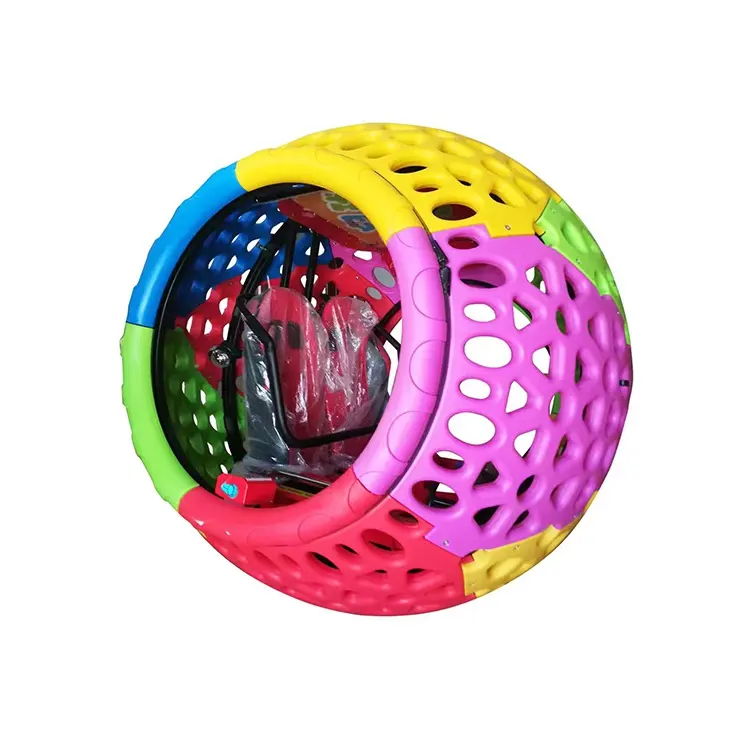
Marwey 360 Degree Remote Control Rolling Car Ride Wholesale Swinging Hamster Ball Manufacturer
Add excitement to your venue with the 360 Rolling Car Swinging Hamster Ball. A thrilling attraction for amusement parks and family entertainment centers.
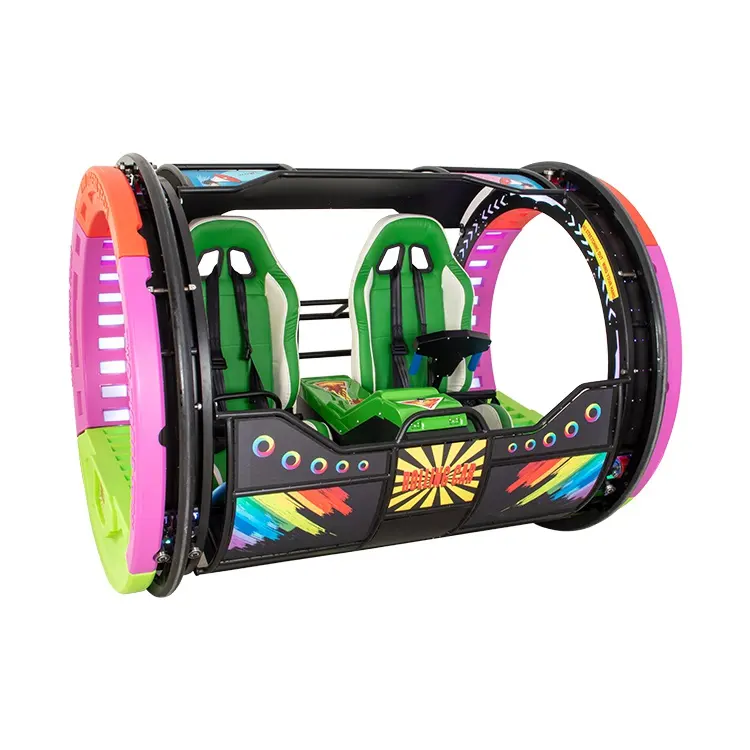
360 Degree Rolling Car for Adults Space Walker 360 Rolling Car Ride for Sale Marwey Amusement Equipment
Explore Marwey’s 360 Rolling Car ride, a thrilling amusement attraction for theme parks and FECs. Durable design, smooth rotation, and customizable solutions.
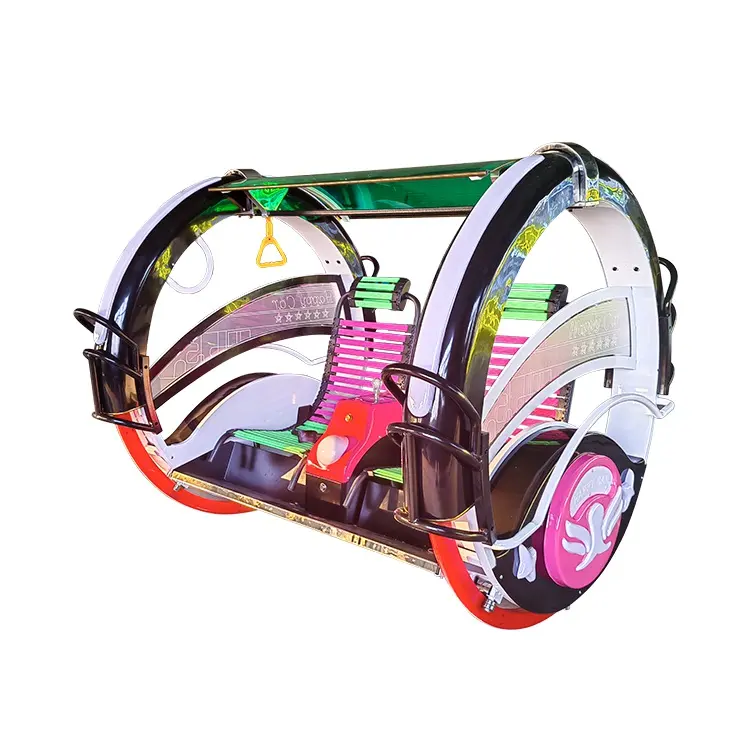
Marwey 180 Degree Rolling Car for Sale 2 Seater Happy Roller Car Supplier
Discover the 180 Happy Rolling Car, an exciting spinning amusement ride for theme parks and family entertainment centers. Safe, durable, and customizable by Marwey.
 Scan QR Code