
Battery and Charging Management for Rolling Car Rides
How to charge, store and monitor the packs used in rolling car rides — charge times per model, four rules that decide pack life, venue charging layouts, cost estimation and reading battery health from operating data.
- Battery and Charging Management for Rolling Car Rides
- Know which pack you are working with
- The four rules that decide pack life
- 1. Never leave a pack deeply discharged
- 2. Charge in the right conditions
- 3. Do not interrupt a charge cycle for a quick session
- 4. Store at a partial charge, not empty and not full
- Running charging at a venue
- What charging costs, and how to estimate it
- Reading battery health from operating data
- Safety points that are not optional
- Frequently asked questions
- Can we charge the ride overnight?
- How long does a full charge take?
- Can we run the ride while it is charging?
- When should a battery be replaced?
- Do different models need different charging routines?
- Treat the charger as part of the ride
Battery and Charging Management for Rolling Car Rides
The battery is the most expensive consumable on a rolling car and the component most often damaged by routine, well-intentioned misuse. A pack that should give you years of service will lose capacity in a season if it is left flat overnight, charged on a hot afternoon, or expected to run a full shift from a partial charge.
This guide covers how to charge, store and monitor the packs used in the Marwey 360 Rolling Car, 180 Happy Rolling Car and 360 Rolling Hamster Ball, and how to organise charging at a venue so that battery management stops being somebody's afterthought at closing time.
Know which pack you are working with
The three models use different packs and different charge times, and mixing up the routine is the most common cause of premature failure:
| Model | Battery | Charging time | Rated working hours |
|---|---|---|---|
| 360 Rolling Car | 48V 20AH | About 8 hours | 5–8 hours |
| 180 Happy Rolling Car | 12V 45AH | About 8 hours | 5–8 hours |
| 360 Rolling Hamster Ball | 48V 25AH | About 4 hours | Model-specific |
The practical consequence: a 48V20AH or 12V45AH unit charged overnight is ready for the next day, but a unit charged at 10pm is not ready at 6am on a 4-hour pack — it is, but a unit pulled off charge early is not. Build your charging schedule around the slowest pack in your fleet, not the fastest.
The four rules that decide pack life
1. Never leave a pack deeply discharged
Put the ride on charge at the end of every operating day, even if it only ran two hours. Deep discharge is the single biggest cause of permanent capacity loss, and it happens silently: the ride still works, it just works for less time each week.
2. Charge in the right conditions
Charge indoors or under cover, in a ventilated area, away from riders and away from anything flammable. Avoid charging immediately after a long session in summer heat — let the pack cool first. Charging a hot pack accelerates wear and, in the worst case, creates a thermal event.
3. Do not interrupt a charge cycle for a quick session
Pulling a ride off charge for a twenty-minute booking and putting it back is not free. Repeated partial cycles in the middle of a charge confuse the charger's cut-off logic and shorten pack life. If a booking appears mid-charge, use a different unit.
4. Store at a partial charge, not empty and not full
For seasonal shutdown or a long quiet period, store packs at roughly half charge in a dry, cool place, and top them up periodically. A pack stored flat for three months may not come back at all.
Running charging at a venue
Charging discipline survives only if the layout supports it. Three practical arrangements, in order of how well they work:
- Dedicated charging bay with fixed chargers. Each ride has a numbered position and its own charger. The operator plugs in at closing and the log is ticked. Fastest, safest, and it makes the daily check trivial.
- Shared charger bank with a rotation board. Workable if you have more rides than chargers. The rotation board must be physical — a whiteboard by the chargers, not a mental note.
- Charging wherever there is a socket. This is how packs get damaged and how charged rides get mixed up with flat ones. If this is your current arrangement, it is worth fixing before you buy another ride.
Whatever arrangement you use, mark charged units clearly — a coloured tag, a magnet, a card in the seat. The most expensive battery failure is the one caused by sending a flat ride into a paid session.
What charging costs, and how to estimate it
Rather than quote a figure that will be wrong for your electricity tariff, calculate it. The arithmetic is simple and takes a minute:
- Take the pack voltage and capacity — for example 48V and 20AH gives 960Wh, or about 0.96kWh per full charge from empty.
- Divide by charger efficiency, which is typically well below 100%, so treat the drawn energy as meaningfully higher than the stored energy.
- Multiply by your local commercial electricity price per kWh.
- Multiply by the number of full charges per month.
Run that for your own tariff and you will find charging is a small line item next to staffing and rent. The mistake is not the cost of electricity — it is treating charging as free time and cutting corners on it.
Reading battery health from operating data
You do not need a battery analyser to know a pack is ageing. You need a log with two columns: date and working hours achieved on a full charge.
Our 360 Rolling Car and 180 Happy Rolling Car are rated at 5–8 working hours per full charge. Plot the number your operators actually record and look for two patterns:
- Gradual decline across all units. Seasonal — heat, heavy use, or a change in session length. Manage expectations rather than replacing packs.
- One unit declining faster than the rest. That pack is failing. Plan the replacement before it strands a paid session, and check the charger that unit uses before blaming the battery.
A sudden drop, rather than a trend, usually points to a charger fault or a connection problem rather than the pack itself. Check the charger on a known-good pack before ordering a battery.
Safety points that are not optional
- Charge with the specified charger only. A faster charger is not an upgrade.
- Never charge a pack that shows swelling, a burning smell, or heat marks on the terminals. Isolate it and replace it.
- Keep a dry powder or appropriate class extinguisher at the charging bay, and make sure staff know where it is.
- Do not charge in a closed room with riders present.
- Record every pack replacement by serial number so you can trace a bad batch.
Frequently asked questions
Can we charge the ride overnight?
Yes, with the specified charger that cuts off automatically. Confirm the cut-off works — a charger that keeps pushing current into a full pack is the failure mode that damages batteries and creates risk.
How long does a full charge take?
About 8 hours for the 48V20AH pack in the 360 Rolling Car and the 12V45AH pack in the 180 Happy Rolling Car, and about 4 hours for the 48V25AH pack in the Hamster Ball.
Can we run the ride while it is charging?
No. Operating on charge is unsafe and damages the pack. Rotate units instead.
When should a battery be replaced?
When measured working hours fall consistently below the level your operation needs, or when the pack shows physical signs of failure. Use the log to make that decision on data rather than on the day it strands a session.
Do different models need different charging routines?
The rules are the same; the timings differ. The 48V25AH pack charges in about half the time of the other two, which makes it the easiest unit to rotate mid-day — and the easiest one to over-cycle if you are not tracking it.
Treat the charger as part of the ride
Most operators budget for batteries and forget chargers, yet a failing charger is the more common fault and the cheaper fix. Label each charger to its ride, inspect the leads monthly, and replace any charger with a damaged cable immediately. Combined with the daily and monthly checks in our maintenance schedule, that habit is what keeps a fleet at its rated 5–8 working hours instead of drifting down to four.
Replacing a pack, expanding a fleet, or specifying power for a new venue? Check the pack specification on the 360 Rolling Car and 180 Happy Rolling Car pages, or ask our team to confirm the right variant for your site.
Off-Season Storage and Restart Checks for Rolling Car Rides
360 Rolling Car Maintenance Schedule: Daily to Yearly Checklist
Troubleshooting a 360 Rolling Car: Joystick, Motion and Power Faults
Spare Parts and Replacement Cycles for 360 Rolling Car Rides
360 Rolling Car
How can I start a project with Marwey?
Simply contact our team through the website or request a quote. Our specialists will help you with project planning, equipment selection, layout design, and turnkey solutions tailored to your entertainment venue.
Is the 360 Rolling Car safe for riders?
Yes. Safety is a top priority in the design of the 360 Rolling Car. The ride is equipped with reinforced safety harnesses, high-strength structural frames, and reliable control systems. Each unit is tested according to strict quality and safety standards to ensure stable operation and rider protection.
What maintenance is required?
Routine maintenance is simple and includes regular inspections, lubrication of moving components, and safety checks. We provide a detailed maintenance guide to ensure smooth operation and long service life.
Does Marwey provide after-sales support?
Yes. Marwey provides comprehensive after-sales service, including technical support, spare parts supply, and maintenance guidance. Our team assists operators throughout the entire lifecycle of the equipment.
Can the 360 Rolling Car be customized?
Yes. Marwey offers customization options including colors, branding, lighting effects, and thematic designs. This allows operators to match the ride with the theme of their park, arcade, or entertainment center.
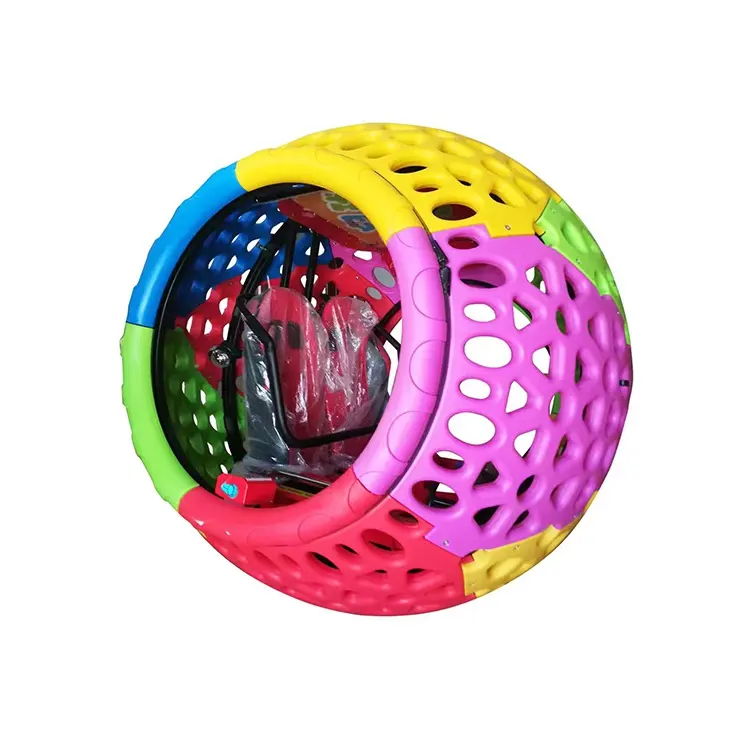
Marwey 360 Degree Remote Control Rolling Car Ride Wholesale Swinging Hamster Ball Manufacturer
Add excitement to your venue with the 360 Rolling Car Swinging Hamster Ball. A thrilling attraction for amusement parks and family entertainment centers.
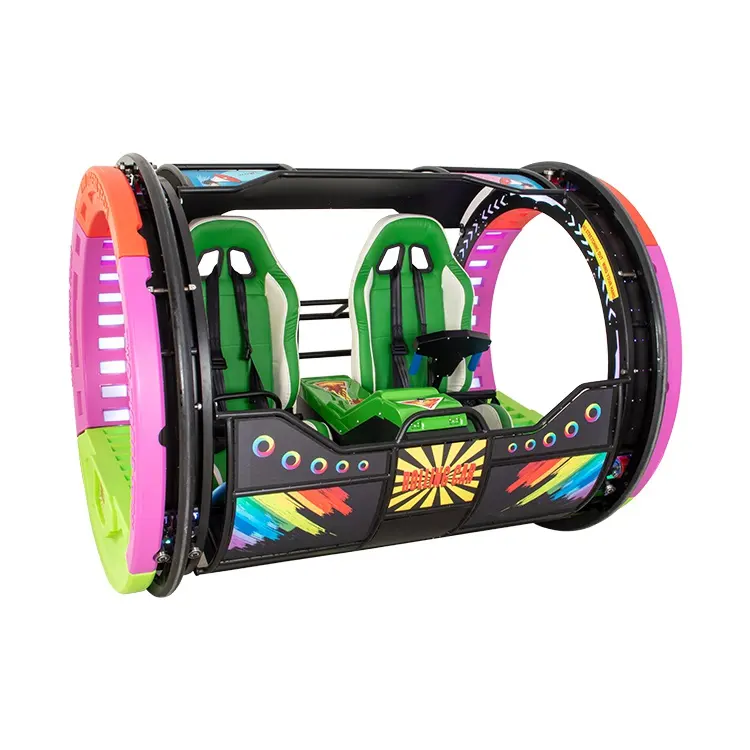
360 Degree Rolling Car for Adults Space Walker 360 Rolling Car Ride for Sale Marwey Amusement Equipment
Explore Marwey’s 360 Rolling Car ride, a thrilling amusement attraction for theme parks and FECs. Durable design, smooth rotation, and customizable solutions.
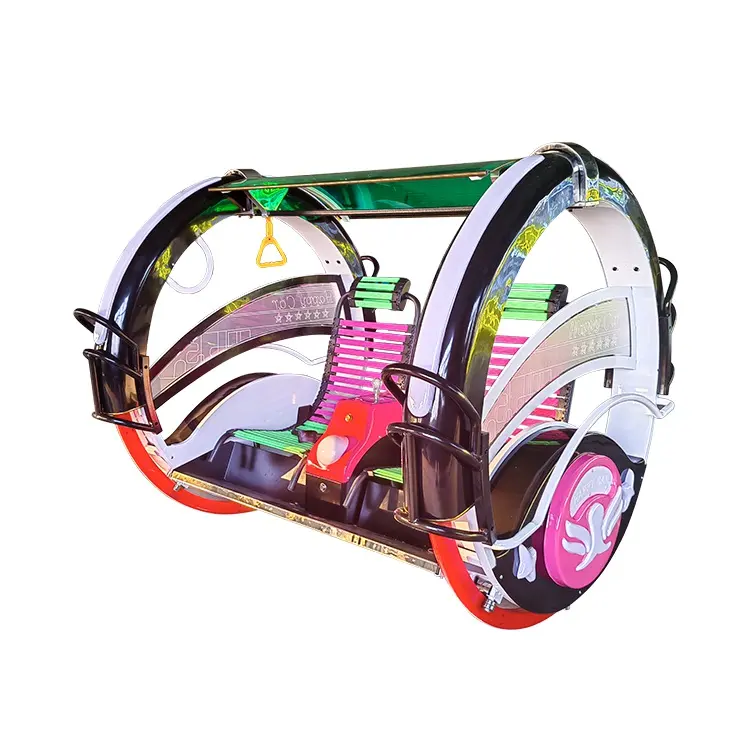
Marwey 180 Degree Rolling Car for Sale 2 Seater Happy Roller Car Supplier
Discover the 180 Happy Rolling Car, an exciting spinning amusement ride for theme parks and family entertainment centers. Safe, durable, and customizable by Marwey.
 Scan QR Code